

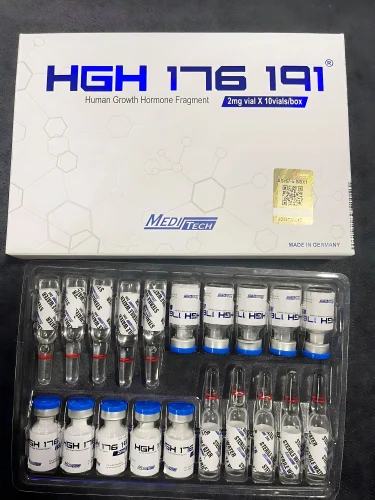
HGH Fragment 176-191


$85.00
HGH Fragment 176-191 5mg*10vials
-
Premium research peptide for metabolic and growth hormone studies.
-
Each box contains 10 vials of lyophilized powder, lab-tested purity ≥99%.
-
Supplied by a trusted USA peptide dealer with secure shipping.
-
Ideal for laboratory research, educational, and scientific purposes.
HGH Fragment 176-191: A Comprehensive Guide to This Specialized Growth Hormone Peptide
HGH Fragment 176-191 is a synthetic peptide derived from a specific portion of human growth hormone (HGH). Over the years, it has attracted significant interest in peptide research due to its unique structure and its relationship to the fat-metabolism region of the natural growth hormone molecule. As peptide science continues to evolve, HGH Fragment 176-191 remains one of the most widely discussed compounds in the fields of metabolic research, biotechnology, and performance-focused studies.
Unlike full-length human growth hormone, HGH Fragment 176-191 consists of only a small segment of the HGH molecule, specifically amino acids 176 through 191. Researchers developed this peptide to investigate how isolated portions of growth hormone may interact with biological pathways independently of the complete hormone.
What Is HGH Fragment 176-191?
HGH Fragment 176-191 is a modified peptide sequence based on the terminal region of human growth hormone. Scientists identified this section because early research suggested it may be associated with certain metabolic functions of growth hormone.
By isolating this specific region, researchers gained the ability to study its properties separately from the broader effects typically associated with full-length HGH. This has made HGH Fragment 176-191 a valuable subject in laboratory and scientific investigations.
Today, HGH Fragment 176-191 is frequently referenced in discussions about peptide technology, metabolic research, and advancements in biotechnology.
Why HGH Fragment 176-191 Has Attracted Scientific Interest
One of the primary reasons HGH Fragment 176-191 has become a popular research peptide is its targeted design. Unlike larger protein hormones, peptide fragments allow scientists to explore specific biological mechanisms with greater precision.
Researchers are interested in understanding how isolated peptide fragments interact with metabolic signaling pathways and cellular processes. This targeted approach helps expand knowledge about peptide biology and hormone-related functions.
As peptide science continues to advance, compounds such as HGH Fragment 176-191 remain important tools for exploring complex biological systems.
Key Areas of Research
Metabolic Research
HGH Fragment 176-191 is commonly studied in metabolic research environments. Scientists investigate how peptide fragments influence biological pathways related to energy utilization and metabolic regulation.
Understanding these mechanisms may contribute to broader knowledge regarding human physiology and metabolic function.
Peptide Technology and Innovation
The development of HGH Fragment 176-191 demonstrates how modern biotechnology can isolate specific regions of larger proteins for detailed study. This approach has become increasingly common in peptide science, leading to the creation of numerous specialized research compounds.
Cellular Signaling Studies
Peptides play an essential role in cellular communication. Researchers continue to examine how HGH Fragment 176-191 interacts with signaling pathways involved in various physiological processes.
These investigations help scientists better understand how peptide-based compounds function at the cellular level.
Biotechnology Applications
The broader field of peptide research continues to expand rapidly. HGH Fragment 176-191 is often included in discussions regarding emerging biotechnology innovations and advanced peptide development strategies.
Its unique molecular structure makes it a valuable model for studying peptide design and biological activity.
Advantages of Peptide-Based Research
Peptides have become increasingly important in scientific research because they offer several unique characteristics:
- Highly specific molecular structures
- Targeted biological interactions
- Relatively straightforward synthesis methods
- Broad research potential
- Compatibility with modern biotechnology platforms
These advantages have contributed to the growing popularity of peptide-based investigations across numerous scientific disciplines.
Quality Considerations for HGH Fragment 176-191
As with any research peptide, quality is an essential factor. High-quality HGH Fragment 176-191 products are typically manufactured according to strict standards designed to ensure purity, consistency, and stability.
Researchers often evaluate products based on:
- Peptide purity levels
- Manufacturing quality controls
- Product stability
- Batch consistency
- Proper storage recommendations
- Documentation and testing procedures
These standards help support reliable and reproducible research outcomes.
The Future of HGH Fragment 176-191 Research
Interest in peptide science continues to grow as researchers uncover new insights into biological signaling systems and metabolic regulation. HGH Fragment 176-191 remains an important component of this expanding field due to its specialized design and research potential.
Advances in biotechnology, molecular biology, and peptide engineering may further expand understanding of how peptide fragments interact with complex biological pathways. Future studies could provide additional information regarding the mechanisms and applications of HGH Fragment 176-191 in scientific research.
As peptide-based technologies continue to evolve, compounds such as HGH Fragment 176-191 are expected to remain valuable tools for exploration and innovation.
Conclusion
HGH Fragment 176-191 is a specialized peptide derived from a targeted region of human growth hormone. Its unique structure and scientific significance have made it a popular subject in metabolic research, peptide technology, and biotechnology studies.
By allowing researchers to investigate specific biological mechanisms independently of full-length growth hormone, HGH Fragment 176-191 contributes to a deeper understanding of peptide science and molecular signaling. As research advances, this peptide is likely to remain an important focus in the ongoing development of innovative peptide-based technologies and scientific discoveries.
Be the first to review “HGH Fragment 176-191”
Related products
99% High Purity Peptides

99% High Purity Peptides
99% High Purity Peptides
99% High Purity Peptides
99% High Purity Peptides

99% High Purity Peptides
99% High Purity Peptides


99% High Purity Peptides
Reviews
There are no reviews yet.