

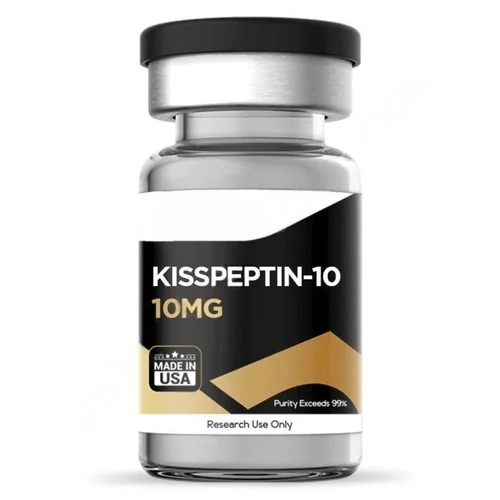

Kisspeptin-10: Understanding Its Role in Reproductive Health and Hormonal Regulation
Kisspeptin-10 is a bioactive peptide that has gained significant attention in scientific research due to its critical role in reproductive health and hormonal regulation. As a fragment of the larger kisspeptin protein, Kisspeptin-10 is involved in controlling the release of reproductive hormones and has become an important subject of study in endocrinology and fertility research.
What Is Kisspeptin-10?
Kisspeptin-10 is a short peptide composed of 10 amino acids derived from the kisspeptin family of proteins encoded by the KISS1 gene. It binds to the GPR54 receptor, also known as the kisspeptin receptor, which plays a central role in regulating the hypothalamic-pituitary-gonadal (HPG) axis. This hormonal system is responsible for controlling puberty, fertility, and reproductive function in both men and women.
How Kisspeptin-10 Works
The primary function of Kisspeptin-10 is to stimulate the release of gonadotropin-releasing hormone (GnRH) from the hypothalamus. GnRH then triggers the secretion of luteinizing hormone (LH) and follicle-stimulating hormone (FSH) from the pituitary gland. These hormones are essential for reproductive processes, including ovulation, sperm production, and sex hormone regulation.
By influencing the HPG axis, Kisspeptin-10 acts as a key regulator of reproductive health and hormonal balance.
Potential Benefits of Kisspeptin-10
1. Fertility Support
One of the most researched applications of Kisspeptin-10 is its potential role in fertility treatment. Studies suggest that it may help stimulate natural hormone production, supporting ovulation and reproductive function in individuals experiencing fertility challenges.
2. Regulation of Puberty
Researchers have identified kisspeptin signaling as a crucial factor in the onset of puberty. Abnormalities in the kisspeptin pathway may contribute to delayed or early puberty, making Kisspeptin-10 an important area of investigation for developmental disorders.
3. Hormonal Health
Kisspeptin-10 may help regulate the production of reproductive hormones, including estrogen and testosterone. This has led to growing interest in its potential applications for hormonal imbalances and endocrine disorders.
4. Scientific Research Applications
Beyond reproductive health, Kisspeptin-10 is widely used in laboratory research to study hormone signaling, neuroendocrine function, and reproductive biology. Scientists continue to explore its broader effects on metabolism, behavior, and overall health.
Current Research and Future Potential
Kisspeptin-10 remains an active area of scientific investigation. Researchers are exploring its potential use in assisted reproductive technologies, treatment of infertility, and management of hormonal disorders. Early findings suggest that kisspeptin-based therapies may offer a more physiological approach to stimulating reproductive hormones compared to some conventional treatments.
However, while research results are promising, many potential applications are still being evaluated through clinical studies. Additional research is necessary to determine long-term safety, effectiveness, and optimal therapeutic uses.
Conclusion
Kisspeptin-10 is a powerful peptide that plays a vital role in reproductive health, fertility, and hormonal regulation. By stimulating key hormones within the hypothalamic-pituitary-gonadal axis, it helps coordinate essential reproductive functions. As scientific interest continues to grow, Kisspeptin-10 may contribute to future advancements in fertility treatment, hormone therapy, and reproductive medicine. Its unique biological functions make it one of the most promising peptides in modern endocrine research.
| KissPeptin-10 | 5mg*10vials, 10mg* |
|---|
Be the first to review “Kisspeptin-10”
Related products

99% High Purity Peptides
99% High Purity Peptides
99% High Purity Peptides

99% High Purity Peptides
99% High Purity Peptides


99% High Purity Peptides
99% High Purity Peptides
99% High Purity Peptides
Reviews
There are no reviews yet.