

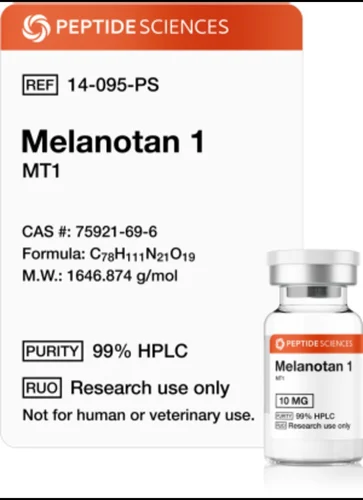
Melanotan 1: Understanding the Science Behind This Synthetic Peptide
Melanotan 1 is a synthetic peptide that has gained attention in scientific and dermatological research due to its relationship with melanin production and skin pigmentation. Developed as an analog of the naturally occurring alpha-melanocyte-stimulating hormone (α-MSH), Melanotan 1 has become a significant topic of interest in peptide science and skin-related studies.
As peptide research continues to advance, scientists are exploring the biological mechanisms and potential applications of compounds like Melanotan 1. Understanding how this peptide works and why it has attracted research interest can provide valuable insight into the broader field of peptide technology and skin biology.
What Is Melanotan 1?
Melanotan 1 is a laboratory-developed peptide designed to mimic the effects of alpha-melanocyte-stimulating hormone, a naturally occurring hormone involved in regulating skin pigmentation. This hormone interacts with melanocortin receptors found throughout the body, particularly those associated with melanin production in the skin.
Melanin is the pigment responsible for determining skin, hair, and eye color. It also plays an important role in helping protect the skin from ultraviolet (UV) radiation. Because of its connection to melanin production, Melanotan 1 has been extensively studied in research focused on pigmentation and skin response to sunlight.
How Melanotan 1 Works
Melanotan 1 functions by binding to melanocortin receptors, particularly the MC1R receptor, which is involved in the regulation of melanin synthesis. Activation of these receptors can stimulate melanocytes, the cells responsible for producing melanin.
Researchers have investigated this mechanism to better understand how pigmentation pathways function and how peptide-based compounds may influence these biological processes. The peptide’s targeted interaction with melanocortin receptors has made it an important tool in scientific studies involving skin biology and pigment regulation.
Why Researchers Study Melanotan 1
Melanotan 1 has become a valuable subject in several areas of research due to its unique biological properties.
Skin Pigmentation Research
One of the primary areas of interest is skin pigmentation. Researchers continue to study how melanocortin receptor activation influences melanin production and overall skin physiology.
Photoprotection Studies
Melanin serves as one of the body’s natural protective mechanisms against UV exposure. Scientists have explored how increased melanin production may affect skin responses to environmental factors and sunlight.
Dermatological Research
The peptide is frequently investigated in studies examining pigmentation disorders and skin-related biological pathways. Understanding these mechanisms may contribute to future advances in dermatological science.
Peptide Science and Biotechnology
Melanotan 1 is also studied as part of the broader field of peptide technology. Researchers use peptide compounds to gain deeper insights into receptor signaling, cellular communication, and biological regulation.
The Growing Interest in Peptide Technology
The peptide industry has expanded significantly in recent years as researchers continue to discover new applications for peptide-based compounds. Peptides are highly valued because they can interact with specific biological targets, allowing scientists to investigate complex physiological systems with greater precision.
Melanotan 1 represents an important example of how synthetic peptides can be designed to mimic naturally occurring biological molecules. This targeted approach has helped drive innovation in biotechnology, pharmaceutical research, and molecular biology.
Quality Considerations for Melanotan 1
For research applications, product quality is essential. High-quality peptide products are typically manufactured according to strict standards designed to support purity, consistency, and stability.
Researchers often evaluate factors such as:
- Peptide purity levels
- Manufacturing quality control
- Product stability
- Storage requirements
- Batch-to-batch consistency
- Laboratory testing procedures
These factors help ensure reliable research outcomes and accurate experimental results.
Future Directions in Melanotan 1 Research
Scientific interest in Melanotan 1 continues to grow as researchers explore its biological properties and receptor interactions. Ongoing studies may provide additional insights into melanocortin signaling pathways, skin physiology, and the broader role of peptides in biological regulation.
Advances in peptide synthesis and biotechnology are expected to expand opportunities for future research, allowing scientists to better understand how compounds like Melanotan 1 interact with complex biological systems.
As the field evolves, Melanotan 1 is likely to remain an important subject within dermatological and peptide-related research.
Conclusion
Melanotan 1 is a synthetic peptide that has become widely recognized in scientific research for its connection to melanin production and skin pigmentation pathways. By mimicking the activity of alpha-melanocyte-stimulating hormone, it provides researchers with a valuable tool for studying melanocortin receptors, pigmentation biology, and peptide signaling.
As peptide science continues to advance, Melanotan 1 remains an important area of investigation within dermatology, biotechnology, and molecular research. Its unique properties and targeted biological interactions highlight the growing potential of peptide-based technologies in modern scientific exploration.
Be the first to review “Melanotan 1”
Related products
99% High Purity Peptides

99% High Purity Peptides

99% High Purity Peptides

99% High Purity Peptides

99% High Purity Peptides
99% High Purity Peptides


99% High Purity Peptides
99% High Purity Peptides
Reviews
There are no reviews yet.