

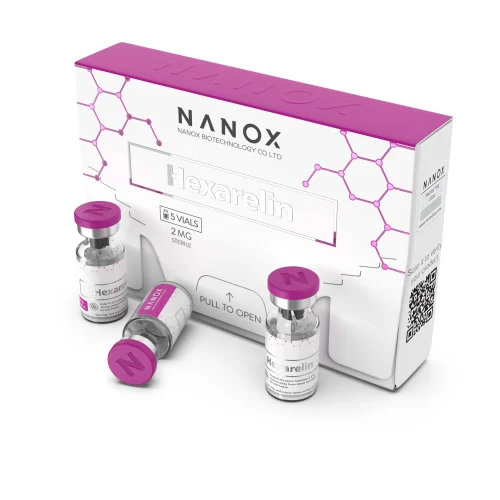


Hexarelin Acetate: A Comprehensive Guide to This Growth Hormone-Releasing Peptide
Hexarelin Acetate is a synthetic peptide that has attracted significant interest in peptide research due to its role as a growth hormone secretagogue. As one of the most studied peptides in its class, Hexarelin Acetate is frequently examined in scientific settings for its interaction with growth hormone pathways and its potential applications in endocrine and metabolic research.
The increasing popularity of peptide science has led researchers to explore compounds like Hexarelin Acetate to better understand how peptides influence cellular communication, hormone signaling, and biological regulation. Today, Hexarelin remains an important subject in peptide and biotechnology research.
What Is Hexarelin Acetate?
Hexarelin Acetate is a synthetic hexapeptide belonging to a category of compounds known as growth hormone-releasing peptides (GHRPs). It was developed to interact with specific receptors involved in the release of growth hormone from the pituitary gland.
Researchers often study Hexarelin because of its strong affinity for the growth hormone secretagogue receptor (GHS-R). Through this interaction, the peptide has become a valuable tool for investigating hormone regulation and related physiological processes.
Unlike naturally occurring hormones, Hexarelin Acetate is a laboratory-developed peptide designed to provide consistent and measurable biological activity in research environments.
How Hexarelin Acetate Works
Hexarelin Acetate functions by binding to growth hormone secretagogue receptors located in various tissues throughout the body. This receptor interaction has made it useful for studying growth hormone signaling pathways and endocrine responses.
Researchers continue to investigate how growth hormone-releasing peptides affect:
- Hormonal regulation
- Metabolic processes
- Cellular signaling
- Tissue biology
- Endocrine system function
Because growth hormone plays a role in multiple physiological systems, peptides such as Hexarelin have become important tools in scientific research.
Areas of Scientific Interest
Growth Hormone Research
One of the primary applications of Hexarelin Acetate is growth hormone-related research. Scientists use the peptide to better understand how growth hormone secretion is regulated and how receptor activation influences biological processes.
Endocrine System Studies
The endocrine system relies on complex signaling networks involving hormones and receptors. Hexarelin is frequently examined in studies focused on hormone communication and regulatory mechanisms.
Metabolic Research
Researchers continue to explore the relationship between growth hormone pathways and metabolism. Hexarelin Acetate is often included in investigations aimed at understanding how peptide signaling may influence metabolic functions.
Cellular Communication
Peptides act as signaling molecules throughout the body. Hexarelin has become a useful research compound for studying cellular interactions and receptor-mediated communication.
Biotechnology Applications
As peptide science advances, compounds such as Hexarelin Acetate contribute to broader biotechnology research efforts. Scientists use these peptides to develop new insights into biological regulation and therapeutic innovation.
Why Researchers Choose Hexarelin Acetate
Hexarelin Acetate has gained attention because of its well-documented receptor activity and extensive research history. Compared with many newer peptides, Hexarelin has been studied for decades, providing researchers with a substantial body of scientific literature.
Some factors contributing to its popularity include:
- Strong receptor affinity
- Extensive scientific documentation
- Consistent laboratory performance
- Relevance to endocrine research
- Broad applicability in peptide studies
These characteristics have helped establish Hexarelin Acetate as a recognized compound within peptide research communities.
Quality Considerations for Hexarelin Acetate
When working with peptide products, quality and purity are critical. High-quality Hexarelin Acetate is typically manufactured under strict standards to support consistency and reliability.
Researchers often evaluate products based on:
- Peptide purity levels
- Manufacturing quality controls
- Product stability
- Batch-to-batch consistency
- Proper storage recommendations
Maintaining these standards helps support accurate and reproducible research outcomes.
The Future of Hexarelin Research
Interest in growth hormone secretagogues continues to expand as scientists gain a deeper understanding of peptide biology. Hexarelin Acetate remains a valuable compound for studying receptor activity, hormone regulation, and endocrine function.
Future research may provide additional insights into the mechanisms through which growth hormone-releasing peptides interact with biological systems. Advances in peptide technology and biotechnology are expected to further expand the scientific relevance of compounds such as Hexarelin.
As peptide science continues to evolve, Hexarelin Acetate is likely to remain an important tool for researchers exploring hormone signaling and cellular communication.
Conclusion
Hexarelin Acetate is a well-known growth hormone-releasing peptide that plays a significant role in modern peptide research. Its interaction with growth hormone secretagogue receptors has made it a valuable compound for studying endocrine regulation, metabolic pathways, and cellular signaling.
With a long history of scientific investigation and continued relevance in biotechnology, Hexarelin Acetate remains a key subject of interest for researchers seeking to better understand the complex mechanisms that govern biological function. As advancements in peptide science continue, Hexarelin is expected to remain an important contributor to ongoing research and innovation.
Be the first to review “Hexarelin Acetate”
Related products
99% High Purity Peptides
99% High Purity Peptides

99% High Purity Peptides
99% High Purity Peptides

99% High Purity Peptides

99% High Purity Peptides
99% High Purity Peptides

99% High Purity Peptides
Reviews
There are no reviews yet.